26.07.2018
The period of intensive cooperation with the Dockers brand is in progress. One of our last productions for this manufacturer was a shop in the center of Stockholm.
This is the male SIS (shop in shop) in Åhléns City – the biggest department store in Stockholm. The Åhléns City chain consists of 66 stores throughout Sweden, employing nearly 3,000 people. In the Swedish capital, the Åhléns department store is located in the very center of the city. Its offer includes already Levi’s store, which is another brand from the Levi Strauss group, with whom we have been cooperating for years. In the above-mentioned department store you will also find stores of premium brands, such as Calvin Klein, Hugo Boss or Gucci, popular global brands such as Espirit and GAP, or, finally, operating mainly on the Scandinavian market, Gestuz or Sandqvist.
This group was joined by Dockers shop in shop prepared by Ergo Store, whose area is 27.3 sq m. The scope of Ergo Store’s work included retail furniture manufacturing and transport. The assembly, made by a local team, was finished at the beginning of July.
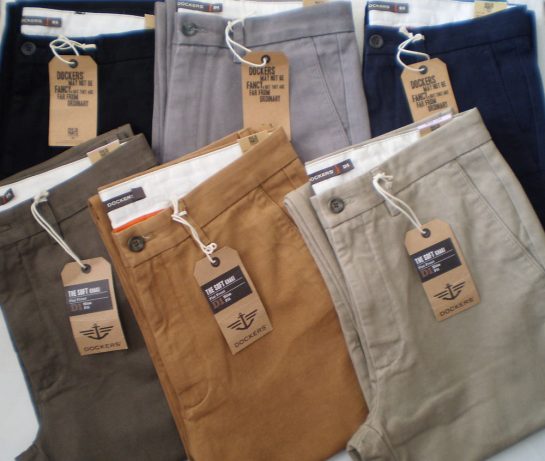
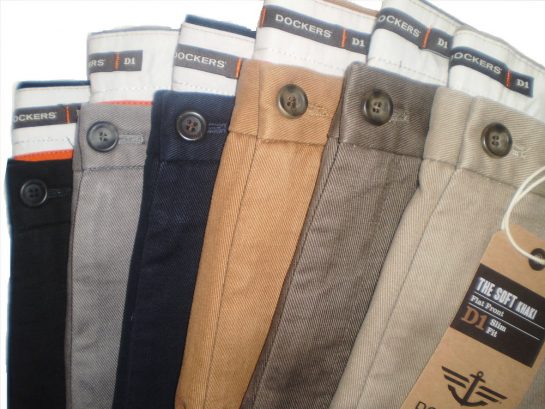
Dockers is a brand established in 1986, specializing in men’s business casual clothing. Her trademark is khaki pants. Dockers has also a product line for women.
This year, for this brand, we have already completed a series of stores in French and Spanish cities, including Nice, Lille and Rouen, as well as in Valladolid, Seville and Malaga. Earlier, we also had the opportunity to work for Dockers in the Scandinavian countries, preparing, among others, showroom in Copenhagen. We will inform you about further productions.
19.03.2026
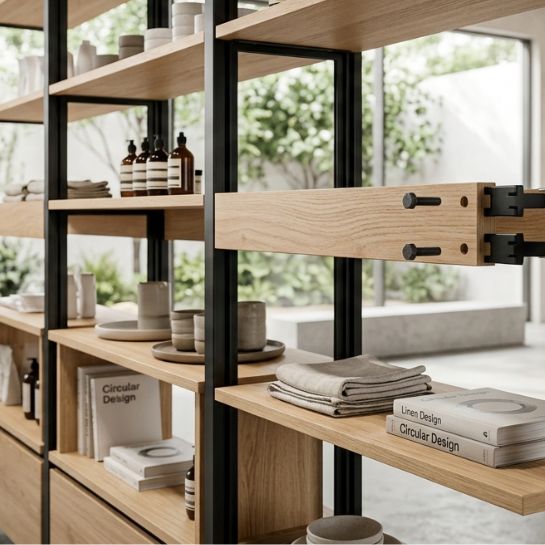
In one of our previous articles, we outlined the general principles of the circular economy in retail. This time, we focus on circular shopfitting - how these principles translate into specific structural, material, and technological solutions in the production of retail furniture.