21.05.2026
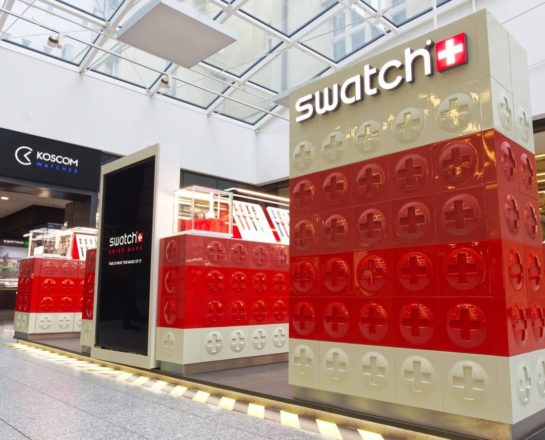
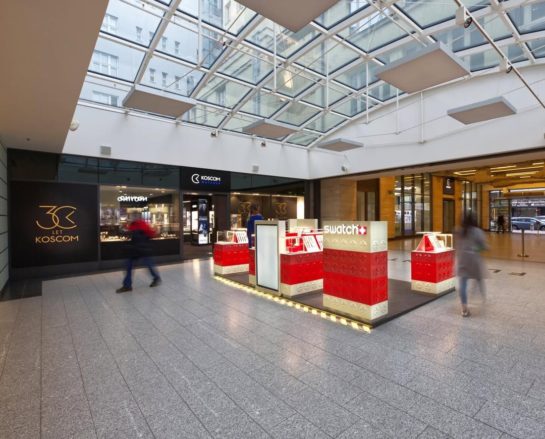
The retail kiosk format has undergone a major transformation. Originally treated by shopping mall operators as a way to fill unused circulation areas, kiosks have evolved into autonomous and highly specialized retail concepts. For brands, they represent a unique business tool: they reduce entry barriers, shorten lease agreements, and generate strong impulse purchases in high-footfall zones.
For nearly 20 years, Ergo Store has been designing and manufacturing advanced commercial spaces in a variety of formats – from monobrand stores to mobile pop-ups and retail kiosks. Our extensive experience delivering projects for market-leading brands allows us to seamlessly combine brand identity with the requirements of contemporary shopfitting.
Designing retail kiosks is the art of optimizing extremely limited space, which typically does not exceed 10 square meters. Furniture layouts must precisely divide the stand into a transaction zone (cash desk), a display area, and a secure, enclosed storage space for staff.
One of the key challenges during the design phase is complying with strict architectural guidelines imposed by commercial property managers. To avoid obstructing traditional storefronts located along the mall passage, the total height of the kiosk structure — including branding — is generally limited to approximately 2.5 meters. Mall administrations also prohibit permanent roofs or canopies that could reduce visibility within common areas.
In retail kiosk shopfitting, structural durability, resistance to intensive use, and assembly precision are top priorities. Furniture placed in shopping mall walkways is constantly exposed to dynamic loads, impacts from shopping carts, and contact with chemical cleaning agents used by maintenance teams. For this reason, furniture manufacturing requires rigorous material selection and highly precise technological processing.
Fire safety standards are equally uncompromising. Since kiosks are located along evacuation routes, their structures and front panels must comply with strict fire safety regulations. For example, wood and wood-based materials used in kiosk construction must carry the appropriate certifications.
Food-service kiosks (such as ice cream or beverage stands) require additional technical solutions, including autonomous water systems consisting of clean and grey water tanks, pumps, and heaters, all compliant with sanitary regulations enforced by institutions such as the State Sanitary Inspection.
Contemporary retail trends have also reshaped the retail kiosk format. This includes sustainability (green shopfitting) and modularity. The use of recycled materials – such as rPET composites or compressed bamboo – is increasingly combined with intelligent click-and-lock assembly systems or magnetic connectors. These solutions allow staff to reconfigure the kiosk layout independently and without tools.
Today’s retail kiosk is becoming an interactive touchpoint between the customer and the brand. Furniture design increasingly incorporates advanced digital devices directly into the furniture structure. LCD displays are mounted flush with the outer surfaces of furniture fronts, preventing dirt accumulation in gaps while maintaining a clean, minimalist appearance. These screens are commonly used for menus and interactive product catalogs.
Kiosks in the optical and cosmetics sectors are also integrating smart mirrors powered by AR technology, enabling customers to virtually try on eyewear frames or test lipstick shades directly on screens embedded into the kiosk counter.
The visual policies of commercial property managers regarding tenant logos and corporate colors have also evolved. Contemporary guidelines emphasize elegance, muted color palettes (earth tones, pastels, black-and-white contrasts), and organic forms inspired by nature. This approach eliminates aggressive plastic advertising surfaces and pushes kiosk designers toward creating refined, sophisticated forms that harmonize with the architecture of shared mall spaces while attracting demanding customers through high-quality detailing.
***
The modern retail kiosk is a technically advanced and multifunctional retail structure. The success of this format depends on selecting an experienced manufacturing partner capable of transforming restrictive technical and legal requirements into a genuine market advantage for the brand. At Ergo Store, we have nearly 20 years of experience producing a wide range of retail formats, including retail kiosks developed for global brands.
Photo: instagram.com/koscomhodinky

09.07.2026
The Balkans remain a constant and highly active destination for our projects carried out for the LPP Group. In the spring of 2026, our team completed another production in the region: a new Sinsay store in the city of Gjakova, Kosovo.