16.10.2025
We are pleased to announce another completed project for our long-term client, the fashion brand More & More. This time, we prepared a monobrand store located in the spa town of Villingen-Schwenningen, Germany.
The monobrand store format allows More & More to maintain full control over its brand image and product presentation, offering the opportunity to showcase complete collections.
The interior of the Villingen store reflects the brand’s elegant and consistent design concept. The dominant bright, neutral color palette creates a calm yet refined atmosphere.
The 68 m² store is located at Rietstraße 18, in the heart of Villingen-Schwenningen. Our company produced a complete set of retai furniture and fixtures. In addition to production, we also handled the on-site installation, carried out on August 21–22, 2025. The store officially opened a few days later, on August 30.
The Villingen store is another project completed in 2025 by Ergo Store for the German fashion brand More & More.
Our portfolio for the brand includes various retail formats. This year alone, we have prepared several monobrand stores in Austria and Germany, as well as a series of shop-in-shops, totaling nearly 30 retail points across Germany.
Over the years of collaboration, we have also produced showrooms (including in Salzburg, Hamburg, and Helsinki) and outlets (such as in Ochtrup).
We are proud to actively support the expansion of the More & More brand, delivering retail furniture to numerous European locations and managing the store production process from A to Z.
02.04.2026
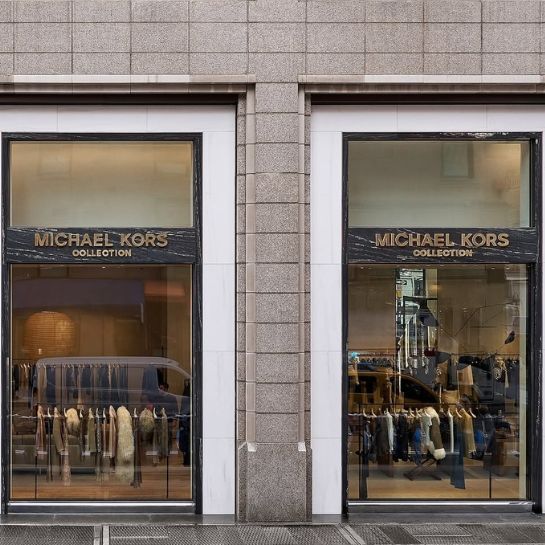
The retail concept of Michael Kors is a journey from an amateur basement boutique to a technologically advanced global retail empire. How has this concept evolved over the years, and what lessons can contemporary commercial space design learn from it?
26.03.2026
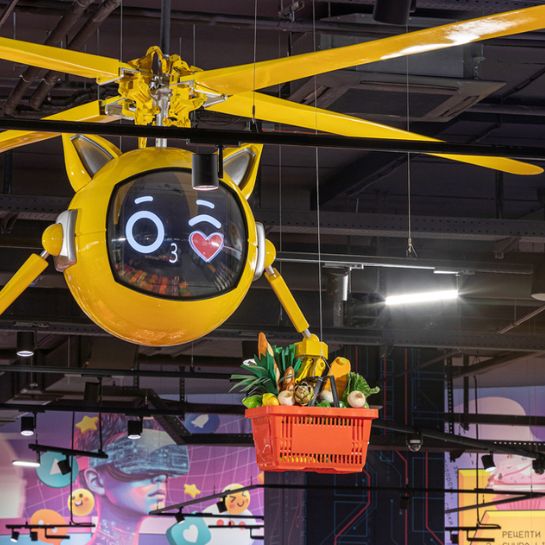
This article presents examples of retail concepts recognized in international competitions such as the EuroShop Retail Design Award, iF Design Award, and Architizer A+Awards, illustrating the direction in which the industry is heading.



