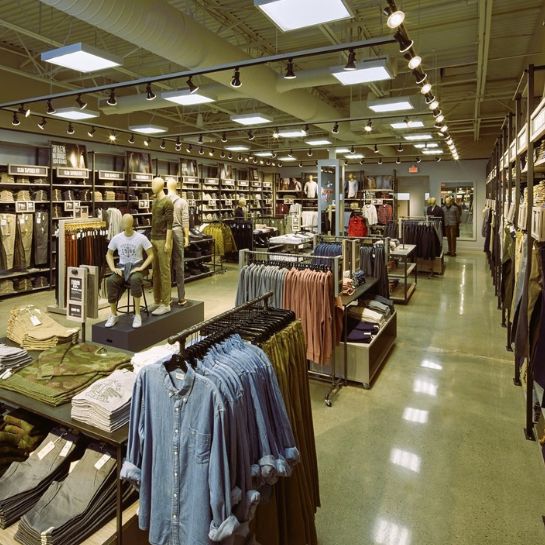
23.04.2026
Signage acts as a “silent salesperson,” operating on the level of subconscious stimuli. Understanding the psychological mechanisms that guide customer movement within a store is essential. As much as 90% of customers’ impressions of a store are shaped by its color scheme and visual aesthetics. Color functions as a tool of emotional communication — for example, vivid colors used in fresh food areas emphasize perceived quality and freshness.
Particular importance is given to the decompression zone — the area immediately after the entrance where customers adapt to a new environment. Professional systems avoid aggressive messaging in this space, focusing instead on smoothly guiding customers deeper into the store.
Since the majority of the population is right-handed, approximately 90% of customers instinctively turn right upon entering a store. Strategically placing signage along this “golden path” allows for optimal product exposure.
Once customers enter the store, the role of signage shifts from attracting attention to guiding movement. A Visual Information System (VIS) is a coherent ecosystem of signs that facilitates orientation while supporting sales performance.
Effective wayfinding represents a comprehensive user-navigation strategy that includes:
Traditional signage media are increasingly being replaced by intelligent digital systems that enable personalized communication. Digital Signage systems are no longer simple in-store screens but intelligent customer touchpoints.
With facial recognition technology and demographic data analysis, displayed content can change depending on who is viewing it. AI systems can identify age group, gender, and even emotional responses, dynamically adapting promotional messages in real time.
Augmented Reality (AR) further enhances the shopping experience by allowing customers to scan products to view 3D presentations or virtually “try on” items.
Modern consumers increasingly pay attention to the environmental responsibility of brands, and retail signage follows this trend. Companies are moving away from plastics toward biodegradable materials and energy-efficient technologies.
A significant innovation in interior signage production is Re-board — lightweight yet rigid corrugated cardboard panels that can replace PVC or aluminum. Their advantages include full biodegradability and the ability to be recycled up to seven times.
High-efficiency LED lighting has also become the standard in illuminated signage systems.
Signage in the modern brick-and-mortar store is a complex communication system combining informational, navigational, and persuasive functions. Success depends on the visual and technological consistency of all elements.
***
Ergo Store brings nearly 20 years of experience in designing and manufacturing commercial spaces for leading fashion and retail brands. We understand that signage is not merely an accessory but an integral component of commercial interior architecture, contributing to aesthetic coherence, functionality, and maximum sales efficiency.
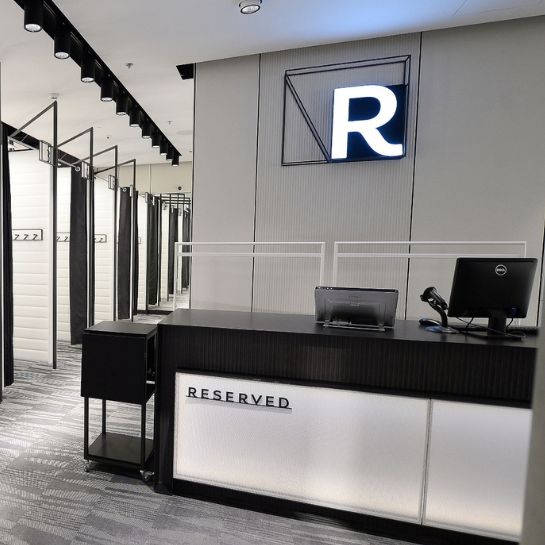
24.09.2026
The checkout zone in a brick-and-mortar store is more than just a payment area - it is a critical brand touchpoint and an effective tool for margin generation. Well-designed retail fixtures turn passive queue waiting into an active decision-making process, directly increasing average basket value.